
White Mortar: Ingredients, Types and Color Control
Learn what makes masonry mortar white, how to distinguish cement from a complete mix, and how sand, tooling and cleaning affect joint color.
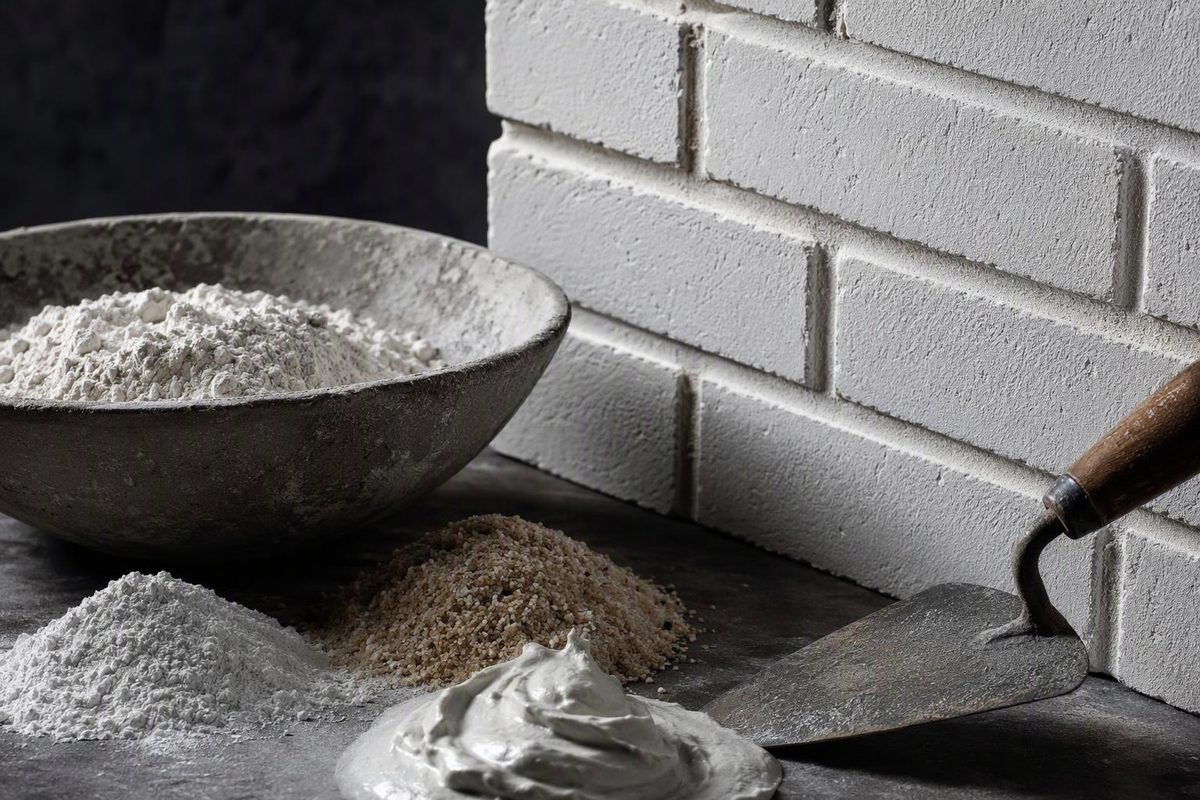
White mortar is masonry mortar made with white cementitious materials and selected sand. “White” describes its appearance—not its strength class or suitability for a wall. Specify the required mortar type and compatibility first, then select the white formulation and joint finish.
White masonry mortar can be made from white masonry cement or white mortar cement plus sand, or from white Portland cement, hydrated lime or lime putty, and sand. For the whitest result, the sand must also be white: buff or brown sand introduces a darker undertone that may become more evident as cleaning or weathering exposes the grains. White and Colored Masonry Mortars recommends sand meeting ASTM C144 and free of silt or clay fines.
Check what the bag contains
White cement and a complete white mortar mix are not interchangeable purchases.
| Product description | What it supplies | What to check before mixing |
|---|---|---|
| White masonry cement or mortar cement | A manufactured masonry binder | Binder type, required sand addition and supplier’s proportions for the specified mortar |
| White Portland cement | The Portland cement component | The specified lime-and-sand formulation; cement alone is not a complete masonry mortar |
| Dry preblended white masonry mortar | A formulated combination of binder and sand | Mortar type, intended use and manufacturer’s water and mixing instructions |
These distinctions follow the formulations in the white-mortar technical guide. As one documented preblended example, TCC Materials’ SPEC MIX Portland Lime & Sand White Mortar contains white Portland cement, hydrated lime and dried masonry sand. Its product page lists Types N, S and O as of October 2026, with availability varying by plant. That range illustrates why the word white cannot identify the mortar type.
For a packaged product, follow its instructions rather than adding extra cement or sand to change the shade. See premixed mortar terminology for the distinction between dry masonry mixes and other products sold as “mortar.”
Select performance separately from color
For new masonry, verify that the proposed white formulation meets the specified mortar type under ASTM C270. White cements used for masonry should meet the same applicable ASTM specifications as their gray counterparts; whiteness is not an alternative performance classification. White-mortar technical guidance
Use the masonry mortar type comparison to distinguish strength and application questions from color selection.
For historic repointing, do not choose a modern white cement mortar merely because it resembles the existing joints. The National Park Service calls for matching color, texture and tooling while making the replacement mortar softer and more vapor-permeable than the masonry units, and no harder or less permeable than the historic mortar. Sand matching is important to both color and texture. Preservation Brief 2
Approve the white in a sample panel
A color chip is a starting point, not final approval. Build a sample panel with the actual brick, block or stone, the proposed mortar, mixing procedure, joint profile, tooling technique and cleaning procedure. Include sealing if it is proposed for the finished work. Evaluate the appearance dry and retain the accepted panel as the reference during construction. Sample-panel guidance
To reproduce that appearance:
- Keep materials consistent. Use the same binder brands and sand source. Protect sand and equipment from dirt; white and light-colored mortar is especially sensitive to contamination.
- Control batching and mixing. Measure ingredients consistently and follow the supplier’s instructions. Water content and mortar stiffness affect joint color.
- Tool at consistent stiffness. Tool joints when thumbprint-hard rather than after an arbitrary fixed interval. Wetter mortar generally appears lighter when tooled.
- Avoid metallic discoloration. Ceramic, stainless-steel or plastic jointers help prevent dark deposits on light joints.
- Test cleaning before applying it broadly. Use the least aggressive suitable method, follow the masonry-unit manufacturer’s recommendations, and inspect the dried test area for etched mortar surfaces.
These controls are detailed in White and Colored Masonry Mortars. Joint shape is a separate decision: concave and V-joints are preferred for weather resistance in that guidance. Compare their profiles in the mortar joint reference.
A useful white-mortar specification therefore identifies the mortar type, exact formulation, sand or preblend, joint profile and accepted sample panel—not just “white mortar.”