
What Was Blind Veterans UK's Early-19th-Century London HQ?
St John's Lodge was the separate, later headquarters and is the building reported as dating from the early 19th century.
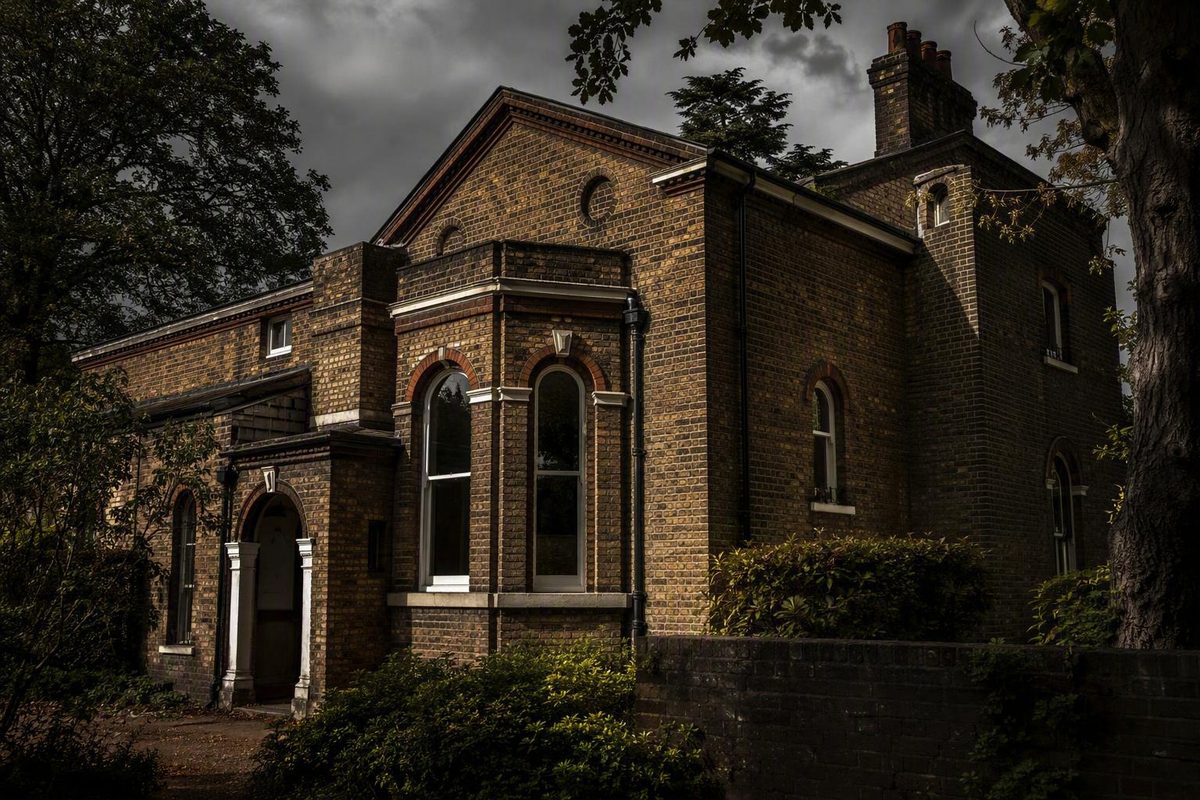
Direct answer: the building is most likely St John’s Lodge
The strongest match is St John’s Lodge in Regent’s Park, a former headquarters of the organisation now called Blind Veterans UK.
St John’s Lodge was neither the charity’s first London premises nor its first base in Regent’s Park. It became the headquarters only after the organisation had worked briefly from Bayswater and then occupied a different property, St Dunstan’s Lodge.
The architectural identification requires some qualification. London Remembers reports that St John’s Lodge was designed by John Raffield and built in 1812. That date places it in the early 19th century and makes it the clearest answer to the architectural clue. The same account describes it as the first house built in Regent’s Park and as one of two surviving villas from John Nash’s original plan.
Those architectural details come from a secondary local-history compilation rather than an authoritative heritage inventory. They should therefore be expressed as reported facts, not as conclusively verified details.
The essential distinction is:
- St Dunstan’s Lodge was the earlier Regent’s Park base and supplied the name by which the charity became widely known.
- St John’s Lodge was the separate, later headquarters and is the building reported as dating from the early 19th century.
- Queen Square is identified by the charity as its present London headquarters location, not the historical building indicated by the clue.
The concise answer is therefore:
The building was most likely St John’s Lodge in Regent’s Park, a former headquarters of the organisation now called Blind Veterans UK. A secondary historical account attributes it to John Raffield and dates it to 1812, although those architectural details await confirmation from an authoritative heritage record.
Three early premises that are easy to confuse
The identification becomes clearer when the charity’s first three London premises are placed in the correct order.
Blind Veterans UK began in London in 1915 as the Blinded Soldiers and Sailors Care Committee. Publisher and newspaper owner Sir Arthur Pearson, who was himself blind, founded it to assist service personnel who had lost their sight during the First World War. The organisation later became known as St Dunstan’s and adopted its present name in 2012, according to Blind Veterans UK’s official history.
1. The temporary Bayswater premises
The new organisation first used 6 Bayswater Hill. A plaque at 150 Bayswater Road, the modern address associated with the site, describes it as Blind Veterans UK’s first training centre and records the charity’s presence there from February to March 1915. The London Remembers plaque record documents the inscription and the uncertainty surrounding the former building.
Other historical accounts describe the premises as a hostel. Either term better reflects its brief, practical role than an unqualified description of it as an established headquarters.
The evidence does not identify the former building securely or confirm its age. It consequently does not support claims that the Bayswater property was an early-19th-century building, that it was a particular neighbouring house, or that it had any specific architectural form. Bayswater was the organisation’s short-lived starting point, not the best answer to the headquarters clue.
2. St Dunstan’s Lodge
The Bayswater accommodation soon became inadequate. American banker Otto Kahn lent Sir Arthur Pearson his Regent’s Park home, St Dunstan’s Lodge.
The charity’s centenary review states that the house received its first 16 blind soldiers and sailors on 26 March 1915. It also confirms Kahn’s role and identifies St Dunstan’s Lodge as the property that gave the organisation its enduring public name. Blind Veterans UK’s centenary account records this early move.
St Dunstan’s Lodge was therefore the charity’s first Regent’s Park base. It played a defining role in the organisation’s identity, but it is not the strongest match for the early-19th-century clue because the cited historical material does not establish its construction date.
3. St John’s Lodge
St John’s Lodge, also in Regent’s Park, came later. The headquarters transferred there after the period at St Dunstan’s Lodge and remained there until the post-war move to Old Marylebone Road.
That order rules out two common errors. St John’s Lodge should not be called the charity’s first London premises, because the Bayswater site preceded it. It should not be called the first Regent’s Park base either, because St Dunstan’s Lodge occupied that position.
Its relevance lies in the combination of two facts: it served as a later headquarters, and it is reported to have been an early-19th-century house.
St Dunstan’s Lodge and St John’s Lodge were not the same building
The two similarly named lodges were separate Regent’s Park properties with different places in the charity’s history.
St Dunstan’s Lodge was the house lent by Otto Kahn during the organisation’s first year. St John’s Lodge was the subsequent headquarters. Accounts that abbreviate both episodes can appear inconsistent, particularly because the institutional name “St Dunstan’s” continued after the organisation had left the lodge from which that name originated.
The organisation formally adopted the St Dunstan’s name in 1923. This followed years of being popularly associated with the name of its first Regent’s Park home, as reflected in the historical overview of Blind Veterans UK.
The two properties can be compared as follows:
| Point of comparison | St Dunstan’s Lodge | St John’s Lodge |
|---|---|---|
| Place in the sequence | Earlier Regent’s Park base | Later Regent’s Park headquarters |
| How the charity obtained it | Lent by American banker Otto Kahn | Became the successor headquarters |
| Naming significance | Supplied the name “St Dunstan’s” | Did not supply the organisation’s former name |
| Reported architectural authorship | Described by London Remembers as Hertford Villa, designed by Decimus Burton | Attributed by the same account to John Raffield |
| Reported later fate | Damaged by fire and subsequently demolished | Survives |
| Relevance to the architectural clue | Its construction date is not established here | Reported as an early-19th-century house |
The architectural attributions are not competing explanations for a single building. The secondary account associates Decimus Burton with St Dunstan’s Lodge, originally Hertford Villa, and John Raffield with St John’s Lodge.
Their later histories also diverged. London Remembers says that St Dunstan’s Lodge was damaged by fire in 1936 and demolished, whereas St John’s Lodge survives. References to Otto Kahn, the origin of the St Dunstan’s name or a building later lost after a fire point to St Dunstan’s Lodge. References to a surviving villa reported as the first house built in Regent’s Park point to St John’s Lodge.
There is therefore no contradiction in saying that an organisation widely known as St Dunstan’s later maintained its headquarters at St John’s Lodge. The institutional name outlasted its occupation of the building from which that name came.
What the evidence says about St John’s Lodge
The architectural argument rests on a small number of related claims in the London Remembers account.
That account attributes St John’s Lodge to John Raffield and gives the construction year cited above. It also describes the lodge as:
- the first house built in Regent’s Park; and
- one of two surviving villas associated with John Nash’s original plan.
Taken together, those details explain why St John’s Lodge appears to fit a query combining Blind Veterans UK, a former London headquarters, Regent’s Park and early-19th-century architecture.
The planning claim also gives the house a significance independent of its later institutional use. If the description is accurate, St John’s Lodge is both a former charity headquarters and a surviving component of the park’s original villa scheme.
The evidence for the organisation’s occupation and the evidence for the building’s architecture should nevertheless be kept separate.
Blind Veterans UK’s historical publications are the stronger sources for the charity’s establishment, purpose, names and movements between premises. They confirm that St John’s Lodge succeeded St Dunstan’s Lodge as the headquarters. They do not independently establish the original architect, construction year or place of the house within Nash’s plan.
London Remembers supplies those architectural details, but its page is a compilation drawing on several historical and journalistic sources. Its claims should therefore be attributed:
- the lodge is reported as a design by John Raffield;
- it is reported as having been built in the early 19th century;
- it is described as the first house built in Regent’s Park;
- it is said to be one of the surviving villas from Nash’s original plan.
This qualification does not weaken the institutional identification. It simply distinguishes a well-supported headquarters history from an architectural attribution that still needs stronger corroboration.
Nothing in the cited material establishes the lodge’s construction materials, structural system, dimensions, façade composition or sequence of alterations. Nor does it provide a confirmed heritage grade, a precise public address or reliable information about access. Those details should not be inferred from the building’s reported age or its position in Regent’s Park.
An official architectural inventory, heritage listing or comparable scholarly record would be needed before presenting the architect, construction year and planning significance as definitive.
When the headquarters moved: why sources give 1920 and 1921
Historical accounts disagree by one year over the transfer from St Dunstan’s Lodge to St John’s Lodge.
London Remembers places the move in 1920, after Otto Kahn requested the return of St Dunstan’s Lodge. Blind Veterans UK’s centenary review identifies St John’s Lodge as the headquarters from 1921. The same sources agree on the order of the properties even though they differ on the year of transition. The two dates are reflected in the local-history account and the charity’s centenary timeline.
The evidence does not explain the discrepancy. It may reflect different stages of the relocation, such as practical occupation and administrative recognition, but no cited record establishes that explanation. It could equally result from differences between later historical summaries.
The most accurate wording is consequently:
The headquarters transferred from St Dunstan’s Lodge to St John’s Lodge around 1920–1921.
The distinction between the two source claims can be retained when greater detail is necessary: London Remembers gives the earlier year, while the centenary review gives the later one.
London Remembers also reports that St John’s Lodge remained the headquarters during the Second World War and sustained some bomb damage. The organisation continued to use it until the subsequent move to Old Marylebone Road.
A timeline of Blind Veterans UK’s London premises
The premises did not all perform the same function. The sequence is best understood by distinguishing a temporary training or hostel site from operational bases and established headquarters.
| Stage | Location | Supported role |
|---|---|---|
| Opening period | 6 Bayswater Hill | Brief hostel or first training-centre site |
| First Regent’s Park stage | St Dunstan’s Lodge | Early operational base and headquarters; source of the St Dunstan’s name |
| Second Regent’s Park stage | St John’s Lodge | Later, longer-term headquarters and the building associated with the architectural clue |
| Post-war move | 191 Old Marylebone Road | Headquarters destination in 1948 |
| Later central London headquarters | 12–14 Harcourt Street | Headquarters from 1984 |
| Latest identified headquarters location | Queen Square | Location adopted in 2021 |
The opening stage lasted only from February into March of the charity’s founding year. St Dunstan’s Lodge then provided the first substantial Regent’s Park base and established the name that would become synonymous with the organisation.
St John’s Lodge succeeded it around the disputed transition described above. It remained the central headquarters through the Second World War and until the move to 191 Old Marylebone Road in 1948.
The later official sequence is clearer. Blind Veterans UK records that it moved to Harcourt Street in 1984 and to Queen Square in 2021. Its history page describes Queen Square as the organisation’s current central London headquarters location. The charity’s account documents both later relocations.
That modern location should not be confused with the historical architectural clue. The cited material does not identify the Queen Square premises as an early-19th-century building. The relevant historical headquarters is St John’s Lodge.
What can and cannot be concluded from the historical record
St John’s Lodge is the strongest supported answer. It is explicitly connected with the charity’s headquarters and is reported as an early-19th-century Regent’s Park villa.
The historical record supports the following sequence:
- The organisation began as the Blinded Soldiers and Sailors Care Committee.
- It first used temporary premises at Bayswater.
- It then moved to St Dunstan’s Lodge, its first Regent’s Park base.
- St Dunstan’s Lodge and St John’s Lodge were separate buildings.
- St John’s Lodge became the later Regent’s Park headquarters.
- The St Dunstan’s name came from the earlier lodge, not St John’s Lodge.
- The headquarters subsequently moved to Old Marylebone Road, Harcourt Street and Queen Square.
The architectural evidence is narrower. A secondary compilation supplies the construction date, John Raffield attribution and claims about the house’s position in the original Regent’s Park plan. The charity’s own histories do not independently verify those points.
Alternative answers are less convincing:
- St Dunstan’s Lodge was the earlier Regent’s Park headquarters and the source of the charity’s former name, but its construction date is not established by the cited material.
- 6 Bayswater Hill was a short-lived opening hostel or training centre, and the age and identity of its former building remain uncertain.
- Old Marylebone Road and Harcourt Street belong to the later headquarters sequence rather than the early architectural history.
- Queen Square is the latest headquarters location identified by the charity, but its building is not established here as early 19th century.
Several questions remain open: whether an official architectural record confirms the reported construction date and architect, whether the headquarters transition occurred in one year or unfolded across two, what formal heritage designation applies to the lodge, and whether it is publicly accessible.
Those uncertainties do not overturn the identification. They determine how it should be worded. The most defensible conclusion is that the early-19th-century building was most likely St John’s Lodge in Regent’s Park, a former headquarters of the organisation now called Blind Veterans UK. It was distinct from the earlier St Dunstan’s Lodge and from the modern headquarters location in Queen Square.
Frequently asked questions
Which Blind Veterans UK headquarters building was built in the early 19th century?
The strongest match is St John’s Lodge in Regent’s Park. A secondary historical account gives the early-19th-century construction date and attributes the design to John Raffield, but an authoritative architectural record would be needed to treat those details as conclusive.
Are St John’s Lodge and St Dunstan’s Lodge the same building?
No. St Dunstan’s Lodge was the earlier property lent by Otto Kahn. St John’s Lodge was the separate house that subsequently became the headquarters.
Why was Blind Veterans UK formerly called St Dunstan’s?
The name came from St Dunstan’s Lodge, the organisation’s first Regent’s Park base. It did not come from the later St John’s Lodge.
Did the headquarters move to St John’s Lodge in 1920 or 1921?
The records differ, and neither year should be selected without qualification. The most accurate formulation is that the transfer occurred around 1920–1921.
Where is Blind Veterans UK headquartered today?
The charity’s official history identifies Queen Square in central London as its current headquarters location following its latest London move. The early-19th-century connection concerns the former headquarters at St John’s Lodge, not the Queen Square premises.