
What Is LEGO Technic Set 8460? Models and Piece Counts
Sources report 841 advertised, 856 actual, 850 pieces and 863 parts in inventory version 2. Check used copies against a release-specific inventory.
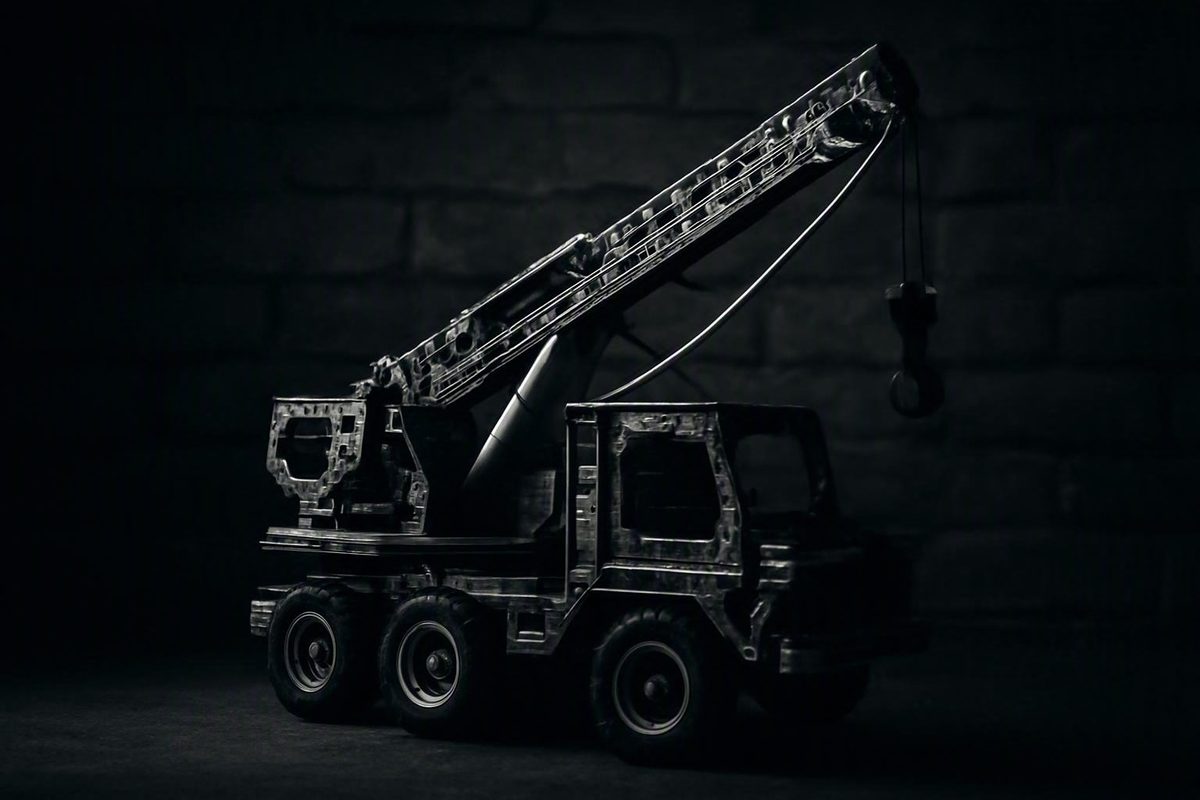
LEGO Technic set 8460 is a substantial vintage pneumatic crane, but its specifications are less straightforward than its familiar yellow-and-gray appearance suggests.
The most reliable approach is to separate widely corroborated facts from source-specific claims. The set’s identity and 1995 debut are well supported. Its exact inventory total, regional packaging history, and model-specific functions require careful attribution.
LEGO Technic 8460 at a glance
| Field | Source-checked summary |
|---|---|
| Set number | 8460-1 |
| Theme and category | LEGO Technic construction model |
| Common name | Pneumatic Crane Truck |
| Other established name | Mobile Crane |
| Debut year | 1995 |
| Broader regional record | 1995–1997, reflecting a 1997 New Zealand entry rather than proven continuous worldwide availability |
| Reported colors | Yellow and gray |
| Reported pneumatic cylinders | Two |
| Minifigures | Zero in third-party set databases |
| Piece-count wording | 841 advertised pieces; modern database totals vary |
| Related later releases | 8431 in 2002 and 8438 in 2003 |
The archived Technica record for set 8460 identifies it as a pneumatic mobile crane, reports the yellow-and-gray color scheme, two pneumatic cylinders and 841 pieces, and describes a 100-page A4 instruction book. It records 1995 entries in several markets and a 1997 entry in New Zealand.
That record is an archived fan-database page, not an official LEGO product specification. Its URL preserves a former Technica entry and should not be confused with the present-day, masonry-focused Isodomos website, which does not claim to maintain a LEGO reference service.
Other third-party catalogs broadly agree on the core identification. BrickInstructions, for example, identifies 8460-1 as Pneumatic Crane Truck, dates it to 1995 and lists zero minifigures, although its piece total differs from other databases. Its record reports 850 pieces and a 100-page booklet rather than the figures used by every other catalog (BrickInstructions set record).
The reasonably stable facts are therefore limited but useful:
- The cataloged set number is 8460-1.
- Pneumatic Crane Truck and Mobile Crane are both established names.
- Multiple third-party databases place its debut in 1995.
- Third-party set records list no minifigures.
- The set uses pneumatic and crane-related components.
- It is closely associated with later releases numbered 8431 and 8438.
The evidence base consists primarily of an archived fan database, modern set catalogs, inventory databases, instruction repositories, a user-authored forum post and marketplace listings. No dedicated official LEGO product page for 8460 is present in the supplied evidence. This means that precise claims must retain their source labels.
“Released in 1995” is corroborated across several databases. “Contains exactly 841 pieces” is not. Similarly, a seller describing a model as “8460/8431/8438” may be acknowledging a related design or alternate model rather than proving that the offered copy is a complete, release-correct 8460.
Why the piece count appears as 841, 850, 856, or 863
No supplied source establishes one definitive official piece count. Four totals appear in established third-party references, and they describe different kinds of records.
| Reported total | Source presentation | Best interpretation |
|---|---|---|
| 841 | Archived Technica reports 841 pieces; ToysPeriod labels 841 as advertised | Historically reported or advertised figure |
| 850 | BrickInstructions set specification | Third-party catalog total |
| 856 | ToysPeriod labels this the actual count | The site’s asserted physical total |
| 863 | Rebrickable inventory version 2 | Versioned modern inventory total |
ToysPeriod is particularly useful because it displays two figures on the same page: 841 as the advertised number and 856 as the actual number. It does not explain the 15-piece difference, so those labels should be preserved rather than turned into an unsupported theory about spares, stickers, tubing or later corrections. The same record dates the set to 1995 and lists zero minifigures (ToysPeriod’s 8460 reference).
BrickInstructions reports 850 pieces. That is six fewer than ToysPeriod’s asserted actual count of 856 and nine more than its advertised figure of 841. BrickInstructions does not explain its counting method, so the discrepancy demonstrates catalog disagreement rather than a provable error by any one database.
Rebrickable uses a different presentation. It lists 863 parts and identifies the record as inventory version 2. Because this is a versioned database inventory rather than a surviving official package statement, the version belongs with the number: Rebrickable reports 863 parts in inventory version 2.
These labels are not interchangeable:
- An advertised count can preserve a number used historically for the set.
- A third-party set specification may reflect that catalog’s imported or internally maintained data.
- An asserted actual count is the database’s attempt to distinguish physical contents from the advertised figure.
- A versioned inventory is a record that can change when contributors revise quantities, classifications or element variants.
These are possible areas to investigate, but the evidence does not establish that any one of them caused the specific differences among 841, 850, 856 and 863.
The most defensible concise wording is:
841 advertised pieces; modern database totals vary.
For a detailed collection record, preserve each source’s terminology rather than presenting an unexplained bare number. Do not import figures from the related sets 8431 or 8438 into the specification for 8460: those releases have their own catalog records and conflicting totals.
A grand total is also a weak test of practical completeness. A pile containing the expected number of elements could still lack a pneumatic component, hose, hook, cord or stickered part. Conversely, a seller’s count may differ because of loose spares or the treatment of flexible elements. A release-specific inventory is more useful than the seller’s total alone.
Pneumatic and crane components documented in the inventory
Set 8460 is best described as a pneumatic Technic construction model. That description does not require assigning every reported function to its primary build. Its identity comes from the combination of pneumatic hardware, crane equipment, axles and other traditional studded Technic construction.
The dedicated BrickLink inventory for 8460-1 documents several distinctive components:
- One black pneumatic hose, cataloged as 207L or 165.6 cm
- One thin black cord whose length is undetermined in the listing
- One large black metal Technic hook
- One set-specific sticker sheet, identified as 8460stk01
- Numerous conventional bricks, plates, slopes, axles and Technic parts
The supplied inventory text is truncated, so this is a limited selection rather than a complete parts list.
The long pneumatic hose deserves special attention when examining a used copy. Buyers concerned with originality should compare its color, routing and length with the dedicated inventory and the building instructions.
The thin cord and metal hook form another recognizable pair. The inventory identifies the hook clearly but does not determine the cord’s length. A listing that promises “all crane parts” should therefore be checked for both components rather than judged from the hook alone.
The set-specific sticker sheet can help distinguish releases. Sticker condition should be recorded separately from completeness: the sheet may be unused, partially applied or absent, while applied stickers may be peeling, faded, damaged or replaced. Clear photographs of every decorated area are more informative than a general statement that stickers are included.
The visible inventory also reflects the set’s period construction style. Reconstructing the set accurately therefore requires attention to basic element types, colors and older connections as well as its specialized crane equipment.
The report of two pneumatic cylinders and a yellow-and-gray scheme comes from the archived Technica entry. The visible BrickLink excerpt confirms pneumatic and crane-related parts but does not independently present a complete cylinder count.
Nor should an inventory for 8438 be substituted for the dedicated 8460 record. The related later crane has comparable hardware, but BrickLink gives its sticker sheet a different set-specific identifier. Similarity does not establish that every element, color or quantity is shared.
A practical audit can begin with the most distinctive components:
- Check for the 8460-specific sticker sheet or the corresponding stickered elements.
- Verify the pneumatic hardware shown in the dedicated inventory and instructions.
- Confirm the long black hose and inspect whether it appears shortened.
- Locate the thin cord and large metal hook.
- Compare wheels, structural elements, axles, gears, bricks and plates with the 8460 inventory.
- Record the manual, box and packaging separately from the loose parts.
This sequence finds consequential omissions before time is spent counting hundreds of common elements.
Main model, alternate truck, and reported motorization instructions
Descriptions of 8460 frequently become confusing because they merge three subjects: the regular build, the alternative truck and features added to a modern fan recreation.
The archived Technica entry says the instruction book covers a main model, a crane-truck model and motorization of the main model. Its extracted wording does not clearly identify what it means by “main model,” however. It is therefore unsafe to assign a complete function list to that build or to state confidently which depicted crane the motorization material addresses.
Manuall reports that alternative-model instructions are included after the regular instructions in the same 100-page booklet. This is a third-party repository’s description, not an independent audit here of an official 8460 manual (Manuall’s 8460 manual page).
Separating the model descriptions
| Category | What the evidence supports |
|---|---|
| Main model | The archived Technica page reports instructions for a main model and its motorization, but the extracted description is insufficient for a complete function list. |
| Alternative or B-model | A named enthusiast describes a truck with a folding knuckleboom crane, steering, separate stabilizer controls, crane rotation and a two-stage pneumatic crane. |
| Modern recreation | A 2021 studless reinterpretation adds a working miniature piston engine and fan; these are not documented original-set functions. |
The detailed B-model description comes from a Eurobricks post by Wiseman_2. The builder characterizes the original-style alternate build as a truck with a folding knuckleboom crane and reports roof-light-controlled front steering, independently controlled left and right stabilizers, left-side crane rotation and a two-stage pneumatic crane. These are useful enthusiast observations, not official specifications (Eurobricks B-model discussion).
The same post must be read carefully because it discusses both original-style functions and modifications. The 2021 recreation includes a working miniature piston engine and a fan driven from the rear drivetrain. The builder distinguishes those additions from the older model’s nonfunctional, display-oriented engine-like feature. A working piston engine and fan should therefore not be advertised as original functions of 8460.
This separation matters during troubleshooting. A mechanism shown in photographs of the alternative truck may not appear in the regular build. A modern reinterpretation may also reroute hoses, gears or axles to accommodate added functions. Before identifying a control as missing or incorrectly assembled, establish which model the instructions and photographs depict.
What “motorization instructions” establishes
The archived Technica page supports a narrow claim: it reports that the booklet includes guidance for motorizing the main model.
It does not establish:
- The exact motor intended
- The use of a particular controller
- Official compatibility with the 8094 Control Centre
- Whether any motorization accessories were included
- Whether later motor systems are suitable
- The complete functions produced by motorization
A period-correct motorized reconstruction should therefore begin with a direct examination of the relevant instruction pages. Enthusiast recollections about controllers or accessories cannot replace clear documentation for 8460.
Disciplined wording prevents most model confusion. Use “the enthusiast-reported B-model functions include…” rather than assigning those features to the set generally. Use “the archived Technica page reports motorization instructions…” rather than naming unsupported equipment.
Release dates, regional names, and reported box variants
Multiple third-party set databases place 8460 in 1995. The archived Technica record provides a more detailed regional list:
| Market | Recorded name | Recorded year |
|---|---|---|
| Denmark | Mobilkran | 1995 |
| Netherlands | Mobiele Kraanwagen | 1995 |
| United Kingdom | Crane Truck | 1995 |
| United States | Mobile Crane | 1995 |
| New Zealand | Pneumatic Crane Truck | 1997 |
These names and years come from the archived Technica regional record, which summarizes the period as 1995–1997.
That range should not be rewritten as “sold worldwide continuously from 1995 through 1997.” The evidence supports 1995 entries in four named markets and a 1997 entry in New Zealand. It does not supply month-by-month availability, retailer coverage, stock duration or a complete list of countries.
The names are not necessarily competing identities. Mobilkran and Mobiele Kraanwagen are localized titles, while Crane Truck, Mobile Crane and Pneumatic Crane Truck emphasize different aspects of the same construction model. A genuine regional box may consequently use a title different from the one favored by a modern catalog.
Set-number verification remains more important than the translated name. A package labeled Mobile Crane may relate to 8460, while Pneumatic Crane Truck is also used for later releases. The visible set number, package design, sticker references, instructions and contents should be considered together.
Rebrickable reports four box-art designs for 8460 and refers readers to 8431 and 8438 for certain light-gray or yellow box versions. Its supplied entry does not document the four designs individually, however. It does not establish their artwork differences, languages, regional assignments, dates, inventories or sticker variations.
“Four reported box-art designs” is therefore defensible. “Four verified regional variants with identical contents” is not.
For a boxed example, useful photographs include every package face, the set number, barcode area, language panel, copyright information, model illustrations, alternate-build image and seals. Such details may help distinguish a regional package from a later numbered release even when the crane artwork is very similar.
How sets 8460, 8431, and 8438 are related
Sets 8460, 8431 and 8438 are closely related pneumatic crane releases, but “related” is safer than “identical.”
The archived Technica record describes 8431 as a 2002 rerelease of 8460. A dedicated third-party record also identifies 8431 as a 2002 Pneumatic Crane Truck, but gives it separate figures of 841 advertised pieces and 886 actual pieces. Those totals belong to 8431 and should not be substituted for the disputed 8460 counts (ToysPeriod’s 8431 record).
Brickset’s editorial set record identifies 8438 as a Technic Pneumatic Crane Truck released in 2003 with 848 pieces. Comments beneath that record discuss its relationship with the earlier crane, but those community observations are not proof that the inventories are identical (Brickset’s 8438 record).
| Set number | Reported year | Recorded name | Source-specific piece figure |
|---|---|---|---|
| 8460-1 | 1995 | Pneumatic Crane Truck / Mobile Crane | 841 advertised; other catalogs report 850, 856 actual or 863 in inventory version 2 |
| 8431 | 2002 | Pneumatic Crane Truck | 841 advertised and 886 actual according to ToysPeriod |
| 8438-1 | 2003 | Pneumatic Crane Truck | 848 according to Brickset |
The table shows why a mixed-number title is insufficient for authentication. The releases share a name and are associated with the same broad crane design, but third-party catalogs maintain separate records and report different totals.
Rebrickable connects 8460 with both later numbers while discussing box versions. None of these practices proves that the releases have identical parts, stickers, colors, functions or packaging.
Without a line-by-line comparison of each inventory, manual and decorated element, the three releases should not be described as:
- Parts-identical
- Sticker-identical
- Packaging-identical
- Functionally identical
- The same set with only a number change
A title such as “8438 8431 8460 Pneumatic Crane Truck alternative model” may simply mean that the assembled model resembles an alternate design associated with all three releases. It does not prove that the pieces came from a 1995 box or that the model is a complete 8460 configuration.
For authentication:
- Confirm the number printed on the box or instruction booklet.
- Compare the sticker sheet with the inventory for the claimed release.
- Determine whether the build is the regular model, B-model or a modification.
- Check the elements against the inventory for that exact set number.
- Record visually similar later-release substitutions as replacements.
- Treat the box, manual and other documentation separately from the model.
A crane can be complete enough to build while containing mixed-release parts. An assembled B-model can also be accurate without representing a complete set inventory, because pieces unused by that model may be absent.
Instructions and resources for rebuilding set 8460
Several third-party sources report a 100-page instruction booklet. The archived Technica entry describes it more specifically as a 100-page A4 book. BrickInstructions and ToysPeriod provide page-by-page images, while Manuall offers an online viewer and a downloadable English PDF.
Manuall currently lists the PDF as 18.38 MB, displays 100 pages and says the alternative-model instructions appear after the regular build. The file size is a repository-specific detail that could change if the hosted document is replaced or recompressed (Manuall instruction viewer).
The booklet order matters. If the regular build appears to end before the final page, that does not necessarily mean the scan is incomplete. The remaining pages may contain the alternative model. Check the visible page sequence before concluding that a second construction belongs to a separate manual.
Different formats serve different purposes:
- Page-by-page images are convenient beside a building area.
- A downloadable PDF is easier to zoom, save or view offline.
- An original paper booklet is a collectible component distinct from a scan or printout.
- A second repository may help identify a blurred, cropped or misordered page.
These are unofficial third-party repositories. Their availability does not establish that the scans are authorized by LEGO, complete, accurately colored, secure to download or permanently accessible. Before rebuilding, check the first and last pages and confirm that the page numbers progress correctly.
Color can be difficult to judge in older scans. Where black, gray or yellow elements are unclear, compare the relevant step with the dedicated inventory and another scan rather than relying on one image.
A page-by-page review may also clarify issues that short catalog descriptions cannot:
- Where the regular build ends
- Where the alternative truck begins
- Which components are reused differently
- How the hose and cord are routed
- Which controls belong to each model
- What the reported motorization section actually illustrates
An original paper booklet should be recorded separately from a downloaded or printed copy. Manuall recommends contacting LEGO if an original manual is required, but that recommendation is not a guarantee that vintage stock remains available.
For reconstruction, use the inventory and instructions together. The manual shows assembly and routing, while the inventory helps identify exact catalog variants and quantities.
Completeness, condition, and price checks for buyers
A used 8460 should be assessed in three separate dimensions: inventory completeness, functional condition, and documentary or packaging completeness. A finished-looking model may lack elements used only by the alternate build, while a complete inventory may contain aged pneumatic parts that do not operate as expected.
Limited completeness checklist
Check at least the following:
- Pneumatic cylinders and associated operating hardware
- The long black pneumatic hose
- The thin black cord
- The large black metal Technic hook
- The 8460-specific sticker sheet or corresponding stickered elements
- The original instruction booklet, if advertised
- The box, inserts, seals or other packaging, if advertised
- All remaining structural and mechanical parts against a dedicated 8460 inventory
This is not a replacement for the full inventory. It prioritizes components that are distinctive, functionally important, easy to lose or useful for distinguishing one release from another.
Inspecting the pneumatic system
Ask for clear photographs of the pneumatic components, tubing and connections. Visible cracking, flattening, discoloration, sharp bends, stretched ends, cuts or improvised joins should be documented before purchase.
For an assembled model, a short demonstration can provide more information than the statement “working.” Ask the seller to show the relevant control being operated, the mechanism moving through its available travel and the model briefly maintaining its position.
Such a demonstration shows only current behavior. It does not prove factory-original performance or establish that every flexible component is original. Record observed operation separately from claims about originality.
Confirming that the listing is really 8460
Mixed-number listings make four checks especially important:
- Set number: Does the box or manual show 8460?
- Sticker identity: Do the sheet or applied stickers correspond to 8460?
- Build identity: Is the photograph showing the regular model, alternate truck or a modified recreation?
- Inventory identity: Were the loose elements checked against 8460 rather than 8431 or 8438?
That practice does not by itself prove deception, but it leaves the exact contents ambiguous. Ask whether the model came from one original set, was rebuilt with replacement parts or was acquired already assembled.
Terms such as MISB, complete, rare, authentic, original and fully working remain seller claims unless independently verified. Even a box presented as sealed should be assessed through detailed photographs of its seals, wear, punctures, crushing, retaping and package panels.
What is LEGO Technic 8460 worth?
The supplied marketplace evidence is insufficient for a reliable value estimate. Two listings show seller expectations, not confirmed transactions.
One listing asked US $489.99 for an example described by the seller as new and MISB. It was listed as shipping from Japan, but the evidence does not supply a reliable observation or listing date for interpreting that price historically. Sealing, condition, completeness and authenticity remained seller claims (purportedly sealed 8460 listing).
Another listing asked US $133 for a used alternative-model crane and combined 8438, 8431 and 8460 in its title. The listing, updated July 1, 2026, claimed that the pneumatics worked perfectly but did not independently establish release-correct completeness (used mixed-number listing).
Neither amount establishes:
- A typical transaction price
- Fair market value
- A guaranteed replacement cost
- Rarity
- Investment performance
- What comparable examples actually sell for
A better valuation process uses completed sales divided into meaningful condition groups:
| Condition group | What to verify |
|---|---|
| Sealed | Seal integrity, box wear, region, set number, authenticity and return terms |
| Boxed complete | Correct inventory, manual, box, inserts, stickers and pneumatic condition |
| Complete loose | Release-correct pieces, documentation if claimed, stickers and current operation |
| Incomplete | Exact omissions, substitutions, pneumatic condition and replacement cost |
Completed-sale data is not present in the supplied evidence, so no dependable current range can be calculated here. Comparisons should use examples from a similar date, market and condition class. A boxed copy with a clean paper manual is not directly comparable with an assembled B-model missing unused pieces.
The headline price is also not necessarily the delivered cost. Shipping, import charges, taxes, currency conversion, insurance, seller location, return rights and included documentation can materially change the comparison.
Frequently asked questions
What year was LEGO Technic set 8460 released?
Multiple third-party catalogs report 1995 as the debut year. The archived Technica record lists 1995 entries for Denmark, the Netherlands, the United Kingdom and the United States, followed by a 1997 New Zealand entry.
The resulting 1995–1997 summary describes those regional records. It does not prove uninterrupted worldwide availability throughout that period.
Does LEGO Technic 8460 have 841, 850, 856, or 863 pieces?
All four totals appear in third-party records. The archive reports 841 pieces; ToysPeriod labels 841 as advertised and 856 as actual; BrickInstructions reports 850; and Rebrickable lists 863 parts in inventory version 2.
No supplied source establishes LEGO’s original counting method well enough to select one figure as definitive. The clearest short description is: 841 advertised pieces; modern database totals vary.
Does set 8460 include a second model?
Third-party manual repositories report that the same booklet contains an alternative model after the regular instructions.
Wiseman_2’s Eurobricks account describes the B-model as a truck with a folding knuckleboom crane, front steering, independently controlled stabilizers, crane rotation and a two-stage pneumatic crane. The working miniature piston engine and fan in the 2021 studless recreation are later modifications, not documented original functions.
What is the difference between LEGO Technic 8460, 8431, and 8438?
8460 is consistently dated to 1995. The archived Technica database calls 8431 a 2002 rerelease, while a dedicated third-party record gives 8431 its own piece figures. Brickset records 8438 as a 2003 Pneumatic Crane Truck with 848 pieces.
The releases are closely related, but the evidence does not prove that their inventories, stickers, packaging, colors or functions are identical. Treat each set number as a separate catalog record.
Where can I find the LEGO Technic 8460 instructions?
BrickInstructions and ToysPeriod provide page-by-page scans, while Manuall offers an online viewer and downloadable English PDF. These third-party repositories report a 100-page booklet, with the alternative-model instructions following the regular build.
A downloaded scan is not the same collectible item as an original paper booklet. Unofficial files should not automatically be assumed to be authorized, complete, accurately colored, secure or permanently available.
The practical verdict
LEGO Technic 8460 is a well-documented but inconsistently cataloged 1995 pneumatic crane. Its identity, period, distinctive crane hardware, substantial instruction booklet, alternate model and connection to later releases are well supported. Its exact piece count, model-specific functions, box history and present value require explicit attribution.
For a prospective purchase, verify the model against a dedicated 8460 inventory and manual, inspect its aging pneumatic components, and compare completed sales within the same condition class. Mixed-set titles and active asking prices can provide leads, but they are not substitutes for release-specific evidence.