
What Are LEGO Color Names in Different Languages?
Six common-color rows span seven different languages, but they are archived fan translations, not official LEGO names.
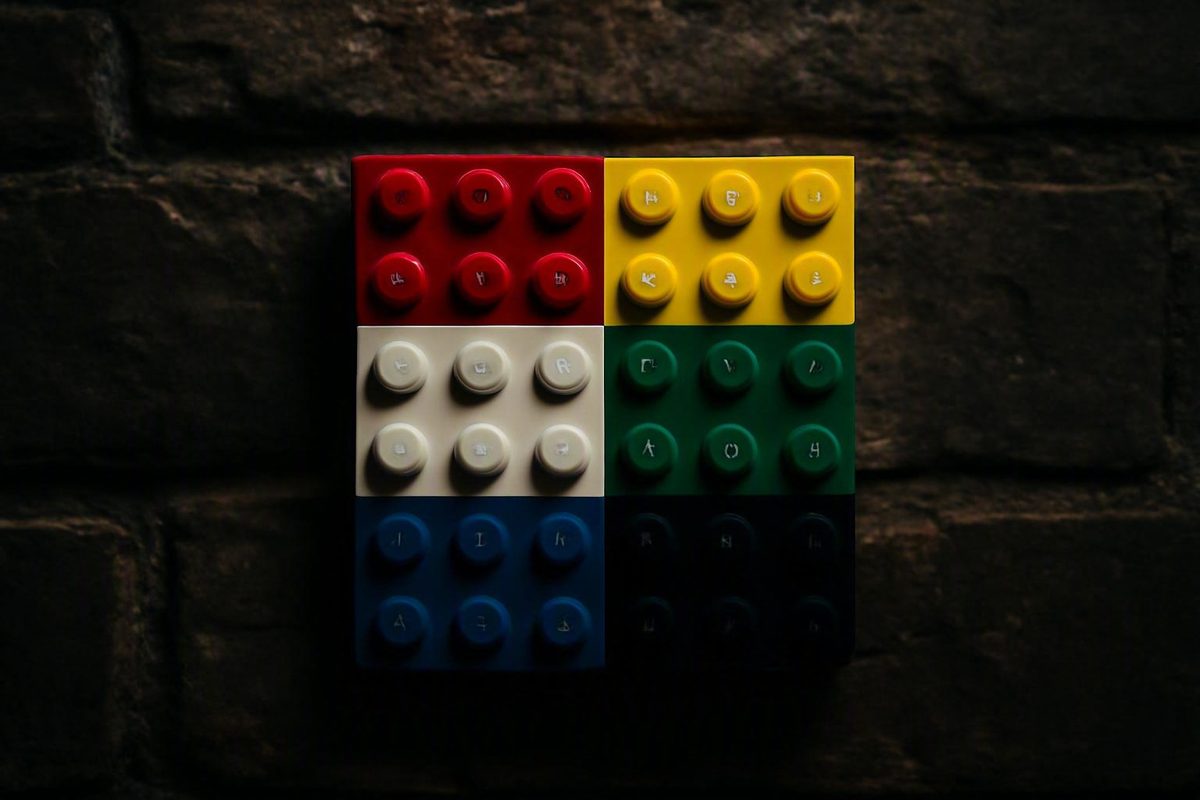
Scope and source warning: This is a historical lookup for six common colors recorded by the archived, third-party Color Tree fan project. It is not a current or official LEGO color guide, and the translations should not be presented as regional names approved or used by LEGO.
What this multilingual color guide can—and cannot—tell you
The historical Color Tree translated English collector color terms into seven languages: German, Italian, French, Spanish, Danish, Dutch, and Portuguese. Its purpose was practical rather than authoritative. The project generally favored literal translations so collectors could preserve distinctions among related color labels.
According to the archived Color Tree translation page, the names were fan-created, might not match those used by LEGO, and were assembled with help from collectors around the world. The archive capture used for this article is dated September 17, 2013.
That makes the table useful when you encounter an unfamiliar word in an old inventory, seller listing, forum post, or collector document. For example, it can show that Rød, Rouge, and Vermelho were intended to correspond to the English collector term Red within this particular fan project.
It does not establish that LEGO used those words in regional catalogs, packaging, websites, databases, or software interfaces. International collector participation provides historical context, but it is not equivalent to first-party approval, systematic native-speaker review, or verification in every regional market.
Use this guide for:
- Recognizing historical collector terms in the seven covered languages
- Interpreting old lists and informal sales descriptions
- Finding possible search terms for further research
- Preserving the vocabulary and spelling used by the Color Tree project
- Identifying entries that need first-party or native-speaker verification
Do not use it alone for:
- Identifying the physical color of a part
- Assigning a LEGO color identifier
- Mapping one catalog’s color record to another
- Claiming that a translation is an official regional LEGO name
- Determining whether a color is current or retired
- Publishing commercial translations without further review
A reasonable literal equivalent is not necessarily suitable as a standalone catalog label.
The supplied archived evidence is also incomplete. It ends during the transparent-color portion of the historical table. This article can therefore transcribe six supported common-color rows, but it cannot reproduce the full Color Tree or reconstruct missing specialized entries.
Quick-reference table for six common colors
The table below reproduces six rows from the archived fan project. It is labeled Archived fan translations, not “official LEGO names.”
Archived fan translations
| English collector term | German | Italian | French | Spanish | Danish | Dutch | Portuguese |
|---|---|---|---|---|---|---|---|
| Red | Rot | Rosso | Rouge | Rojo | Rød | Rood | Vermelho |
| Blue | Blau | Blu | Bleu | Azul | Blå | Blauw | Azul |
| Green | Grün | Verde | Vert | Verde | Grøn | Groen | Verde |
| Yellow | Gelb | Giallo | Jaune | Amarillo | Gul | Geel | Amarelo |
| Black | Schwarze ⚠️ | Nero | Noir | Negro | Sort | Zwart | Preto |
| White | Weiß | Bianco | Blanc | Blanco | Hvid | Wit | Branco |
Source note: The spellings above are transcribed from the archived third-party Color Tree table. They represent what the fan project placed in its six rows, not independently verified modern terminology.
Caution on German “Schwarze”: The Black entry is reproduced exactly as it appears in the archived row. Silently replacing it would substitute an editorial correction for the historical evidence.
The same preservation principle applies to accents and language-specific characters. When quoting the archive, retain forms such as Weiß, Grün, Rød, Blå, and Grøn. Removing their diacritics would make the transcription less faithful and could complicate later verification.
This table answers one limited question: “What did the Color Tree fan project place in each cell?” It does not answer: “What is the official or current name of this physical LEGO color in a particular market?”
That distinction becomes especially important with related shades and compound labels. Translating the words in an English collector term does not prove that a regional catalog recognizes the same distinction, uses the same word order, or assigns the term to the same physical color.
The same colors viewed language by language
Readers approaching the lookup from a non-English word may find a language index faster to scan. Each list follows this order:
Red · Blue · Green · Yellow · Black · White
-
German: Rot · Blau · Grün · Gelb · Schwarze · Weiß Schwarze is the archived Black entry and requires grammatical review in context.
-
Italian: Rosso · Blu · Verde · Giallo · Nero · Bianco
-
French: Rouge · Bleu · Vert · Jaune · Noir · Blanc
-
Spanish: Rojo · Azul · Verde · Amarillo · Negro · Blanco
-
Danish: Rød · Blå · Grøn · Gul · Sort · Hvid
-
Dutch: Rood · Blauw · Groen · Geel · Zwart · Wit
-
Portuguese: Vermelho · Azul · Verde · Amarelo · Preto · Branco
Some overlaps are directly visible in the archived entries. Azul appears under Blue in both Spanish and Portuguese, while Verde appears under Green in Italian, Spanish, and Portuguese.
Identical spelling does not prove that two regional LEGO systems use the same official designation or that two catalog records represent the same physical color. It shows only that the archived fan table contains the same written form in those cells.
Use the language index as a recognition aid:
- Find the unfamiliar term.
- Note its corresponding English collector term.
- Preserve the original language and spelling.
- Identify the catalog or naming system in which it appeared.
- Verify any physical-color mapping separately.
Finding Verde in a historical list, for example, supports a cautious English gloss of Green within this archive. It does not reveal whether the original writer meant a basic green, a system-specific color record, or a specialized shade whose qualifier was omitted.
When possible, inspect the source date, catalog name, inventory heading, neighboring entries, part information, photographs, and identifiers supplied by the original record. The translated word is one clue rather than a complete identification method.
Specialized collector terms beyond basic colors
The historical Color Tree extended beyond ordinary terms such as Red and White. The supplied archived evidence reports theme-associated labels, transparent colors, neon terminology, and glow-in-the-dark terminology, including:
- Fabuland Orange
- Maersk Blue
- Sand Green
- Trans-Neon Green
- Glow In The Dark
These are specialized labels reported in the archived fan table. Their presence does not establish that they were official LEGO terms in English or that literal equivalents were official in every covered language.
The available evidence does not provide complete, dependable row-level translations for those examples. Their German, Italian, French, Spanish, Danish, Dutch, and Portuguese equivalents are therefore not reconstructed here.
Specialized compounds pose questions that basic color words may not. A translator must decide whether to translate the modifier, change the word order, join the elements, or adapt the construction to the target language’s grammar.
Theme- or brand-associated wording introduces another issue.
Transparent and effect-based labels require further decisions, such as:
- Whether an abbreviation such as “Trans” should be retained or expanded
- How modifiers should be ordered or joined
- Whether “neon” should be treated as a borrowed term
- Whether the label describes color, appearance, or an effect
- Whether capitalization or hyphenation belongs to a particular catalog convention
The Color Tree’s generally literal method is consistent with its stated aim of distinguishing collector colors. Literal consistency, however, does not establish idiomatic or official regional usage.
Because the supplied material is truncated during the transparent-color section, it cannot support a complete transcription of transparent, neon, glow-related, or other effect-based entries. Missing cells should not be filled by inference.
Any future specialized entry should carry a clear status:
- Verified: Supported by an appropriate source for the specified language and naming system
- Uncertain: Plausible but insufficiently confirmed
- Disputed: Conflicting sources or reviewer judgments exist
- Unavailable: No defensible translation or official name has been found
An explicit “unavailable” is preferable to an unsupported but precise-looking translation, particularly in inventories and commercial listings where readers could mistake linguistic equivalence for a verified physical-color match.
Literal translations versus official regional names
Three categories help keep the archived entries in context.
Official regional name A term supported by first-party LEGO evidence for a specified language, market, interface, document, or period. Evidence from one context should not automatically be generalized to every region or date.
Collector alias A community-created label used to discuss or distinguish a color. It may be practical, familiar, or historically important without being an official LEGO designation.
Literal translation A rendering intended to convey the words in another language. It can communicate an idea without proving that LEGO or a particular parts catalog uses the expression.
Within the evidence available for this article, all Color Tree entries remain fan-created or literal translations. None can be upgraded to an official regional name because the source pack contains no first-party regional LEGO evidence supporting that status.
The project’s goal helps explain its method. Collectors needed distinct labels for related colors, and literal translation offered a structured way to carry those distinctions across languages. The result may work as a cross-language gloss even when it is not the most natural standalone expression.
Factors that can affect a translated label include:
- Grammatical gender: A color adjective may change with an understood noun.
- Adjective agreement: Gender, number, case, or definiteness may affect the form.
- Compounds: Words may be joined, hyphenated, reordered, or expressed as a phrase.
- Capitalization: Catalog conventions may differ from ordinary usage.
- Accents and diacritics: Omissions can make a transcription incomplete.
- Regional usage: A familiar term in one region may be unusual elsewhere.
- Historical convention: An older collector label may no longer be preferred.
The archived German entry Schwarze illustrates why an isolated cell should not be assumed to be grammatically universal. The historical table establishes what was entered, but not the full grammatical phrase contributors may have had in mind. Preservation is appropriate in a transcription; unqualified modern reuse requires additional review.
Naming systems add a separate risk. LEGO, BrickLink, Rebrickable, LDraw, and other catalogs should not be presumed to use interchangeable names or identifiers. The archive provides no verified mapping among those systems and no verified correspondence between its translated words and physical color IDs.
Whenever a translated term is added to an inventory, listing, or catalog, record at least:
- The original spelling
- The language
- The naming system
- The source
- The date checked
- The verification status
For example, “Portuguese: Verde; archived Color Tree fan translation” is more transparent than entering Verde without context. The fuller record identifies what the word represents without implying official status or a verified physical mapping.
How to avoid mismatching a color across languages
Treat a translated color name as a search aid, not conclusive proof that two records describe the same physical color. The following workflow is editorial guidance for using the archive cautiously; it is not a color mapping supplied by the Color Tree.
1. Identify the naming system
Determine whether each term comes from LEGO, a marketplace, a fan inventory, a digital modeling standard, a database, or an informal seller description. A translation cannot compensate for an unidentified naming system.
2. Preserve the original wording
Record the source term alongside its cautious English gloss:
- Original term: Grøn
- Language: Danish
- English collector gloss: Green
Keeping both forms allows later users to audit or revise the interpretation.
3. Record identifiers only within their verified context
If the catalog being used supplies a stable color identifier, record it exactly as that catalog presents it. The archived Color Tree does not supply verified LEGO color IDs.
Do not attach an identifier from another catalog to an archived translation merely because the names appear equivalent. That connection requires an independently verified mapping.
4. Separate linguistic review from color identification
A language reviewer may assess whether a term is grammatical and natural. A catalog specialist may determine whether it appears in a particular naming system. Neither task, by itself, proves that a physical part matches another catalog record.
5. Request native-speaker review before publication
Before using translations in a catalog, storefront, or commercial listing, ask a qualified native speaker to review:
- Accents and diacritics
- Grammatical form
- Adjective agreement
- Compound construction
- Capitalization
- Regional naturalness
- Whether specialist wording should be translated or retained
The archive’s unofficial status and the contextual concern surrounding Schwarze justify this extra review.
6. Do not use a screen swatch as a physical standard
The archived source does not establish rendered swatches as exact representations of physical colors. A visual resemblance on a display is therefore not evidence of a catalog mapping or identifier.
7. Make uncertainty visible
Useful status labels include:
- Historical fan translation
- Literal translation only
- Unreviewed
- Native-speaker reviewed
- Catalog usage verified
- Physical mapping unverified
- Conflicting evidence
- Official status not established
A practical record can use this template:
| Field | What to record |
|---|---|
| Original term | Exact spelling from the source |
| Language | German, Italian, French, Spanish, Danish, Dutch, or Portuguese |
| English collector term | The English Color Tree term or a cautious gloss |
| Naming system | Color Tree, seller terminology, or the specific catalog used |
| Catalog identifier | Only if independently supplied and verified for that system |
| Source URL | The exact page where the term was found |
| Verification status | Fan translation, literal, reviewed, disputed, unavailable, or verified |
| Date checked | The date on which the record and source were reviewed |
A historical Color Tree record might look like this:
| Field | Example |
|---|---|
| Original term | Rød |
| Language | Danish |
| English collector term | Red |
| Naming system | Archived Color Tree fan translation |
| Catalog identifier | Not supplied |
| Source URL | Archived Color Tree translation page |
| Verification status | Historical fan translation; official usage not established |
| Date checked | Record the actual review date |
This process does not eliminate ambiguity. It prevents an unsupported translation from quietly becoming an asserted catalog or physical-color mapping.
What a complete modern multilingual reference would still need
The archived Color Tree remains useful as evidence of one collector community’s translation project. The supplied material covers seven languages, preserves six common-color rows, and reports attempts to translate specialized terminology.
A definitive modern reference would need substantially more evidence.
First, it would require current first-party terminology for each supported language or market. Every term would need to be tied to the specific website, catalog, interface, document, or product context in which it appeared.
Second, it would need independently verified identifiers. Names can vary across languages, periods, abbreviations, and catalog systems. An identifier can provide a stronger anchor only within the system that issued it.
Third, it would need documented cross-catalog mappings. A modern reference should explain how records relate without implying that LEGO, BrickLink, Rebrickable, LDraw, and other systems share one vocabulary or identifier scheme.
Fourth, it would require native-speaker review in every covered language. Review would need to address ordinary color words, compounds, proper-name elements, abbreviations, grammatical agreement, regional usage, and historical forms.
Fifth, every entry would need a verification date. A term documented for one interface or period should not automatically be presented as permanently current.
The supplied archive does not establish whether an individual color is current or retired. It also does not provide a complete, dependable modern classification of transparent, metallic, pearlescent, neon, or glow-in-the-dark colors. Those properties should not be assigned solely because a historical collector label appears to suggest them.
Its language coverage must remain bounded. The evidence supports German, Italian, French, Spanish, Danish, Dutch, and Portuguese; it does not support translations into additional languages.
Finally, the missing portion of the transparent-color table would need to be recovered before anyone attempted a complete historical transcription. Recovery would only be the first step: the entries would still need independent checking for spelling, grammar, catalog context, and official status.
A compact editorial standard for future work is:
- Identify the naming system.
- Cite the exact source.
- Retain the original spelling.
- Record the verification date.
- Flag uncertainty explicitly.
- Keep translation separate from physical-color mapping.
- Never upgrade a fan translation to official status without first-party evidence.
The six common rows provide a useful historical lookup precisely because their limits are stated clearly. They are archived fan translations, not verified official LEGO regional names. Preserve the original spelling, identify the naming system, document the source and date, and seek current first-party or native-speaker verification before using a translated term to match, buy, sell, or catalog a physical color.
Frequently asked questions
Are these official LEGO color names in German, French, Spanish, and other languages?
No. They are archived fan-created translations. The historical Color Tree page warns that its names may not match those used by LEGO.
Official status would require suitable first-party evidence for the relevant language, market, context, and period. No such evidence is available in the source pack used here.
Which languages are included in the archived Color Tree translation table?
The archive covers seven languages in addition to the English collector terms:
- German
- Italian
- French
- Spanish
- Danish
- Dutch
- Portuguese
The available evidence does not support extending the table to other languages.
How do you say red, blue, green, yellow, black, and white in the seven covered languages?
The complete six-color lookup appears in the quick-reference table above. In language order, the archived entries are:
- German: Rot, Blau, Grün, Gelb, Schwarze, Weiß
- Italian: Rosso, Blu, Verde, Giallo, Nero, Bianco
- French: Rouge, Bleu, Vert, Jaune, Noir, Blanc
- Spanish: Rojo, Azul, Verde, Amarillo, Negro, Blanco
- Danish: Rød, Blå, Grøn, Gul, Sort, Hvid
- Dutch: Rood, Blauw, Groen, Geel, Zwart, Wit
- Portuguese: Vermelho, Azul, Verde, Amarelo, Preto, Branco
The German Black form Schwarze is reproduced from the archive and should be reviewed in grammatical context before reuse.
Does the archive translate specialized terms such as Sand Green, Maersk Blue, and Trans-Neon Green?
The supplied archived evidence reports specialized labels including Sand Green, Maersk Blue, Fabuland Orange, Trans-Neon Green, and Glow In The Dark. It also extends into transparent and other effect-based terminology.
However, the available material does not provide complete row-level translations for those examples. Their seven-language equivalents should not be invented or reconstructed.
Is the archived multilingual LEGO color table complete and current?
No. It is a historical fan reference, and the supplied evidence is truncated during the transparent-color section. It cannot support a complete transcription, current regional terminology, official color identifiers, cross-catalog mappings, or current-versus-retired status.
Use the six supported common-color rows for historical orientation. For physical matching, buying, selling, or catalog publication, preserve the original term and verify it against current first-party documentation, the relevant catalog system, and appropriate native-speaker review.